Signed in as:
filler@godaddy.com
Why Nepal?
That asNepal contributes less than 0.1% of global greenhouse gas emissions. It is consistently ranked among the most climate-vulnerable countries on Earth.
That asymmetry is not a footnote. It is the story. Nepal is ground zero for climate change, not because it caused it, but because it feels it first.
The water tower
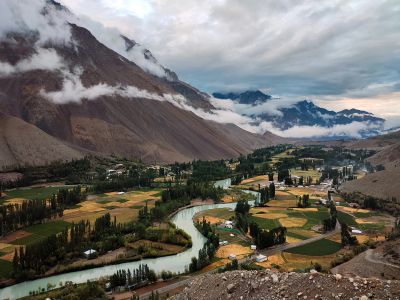
The Hindu Kush Himalaya is the largest ice mass outside the poles. Its glaciers feed ten major river systems and provide water to nearly two billion people across Asia. Nepal sits at the geographic center of this system, between the two most populated countries on Earth.
These glaciers lost 12% of their area between 1990 and 2020. The rate of loss accelerated 65% from the 2000s to the 2010s. The Himalayan region is warming at least twice as fast as the global average. Under current emissions trajectories, up to 80% of HKH glacier volume could be gone by 2100.
Over 25,000 glacial lakes now sit where ice used to be. In August 2024, one of them burst above Thame village in the Everest region and devastated it. A month later, floods and landslides across Nepal killed 250 people, displaced over 10,800 families, and caused an estimated NPR 46.7 billion in damage.
The economy on the front line
Agriculture employs 60% of Nepal's workforce. Hydropower is the country's central energy and growth strategy. Tourism depends on the mountains. These are not diversified bets. They are all climate-exposed, and they are the whole economy.
Nepal's own updated climate commitment targets net-zero emissions by 2045 and estimates adaptation costs of USD 18-20 billion through 2035. The country that did the least to cause the problem is spending the most, relative to what it has, to survive it.
Why this matters for data
Nepal's central bank now requires every commercial bank to screen lending portfolios for environmental risk, classify loans against a green finance taxonomy, and prepare for climate-related financial disclosure. Banks that have never thought about emissions data are now required to measure it.
The data they need does not exist in any single place. It is scattered across government agencies, international databases, satellite systems, and research institutions. Assembling it is the same problem climate researchers have faced for decades, now arriving at the doors of financial institutions on a regulatory deadline.
Why we build here
If you can build climate data infrastructure that works in Nepal, where monitoring stations are sparse, terrain is extreme, data standards vary by district, and the stakes could not be higher, it works anywhere.
Nepal is not a test market. It is the hardest problem in climate data. We started here on purpose.